Professional scalp massage has become a high-value ritual in premium spas and beauty institutes. It goes far beyond simple scalp relaxation: when it is structured correctly, it can improve the perceived quality of the service, make the client journey more distinctive and strengthen the establishment’s premium positioning. The ritual requires precise technique, an appropriate assessment of the client’s comfort and professional equipment designed to support both client wellbeing and practitioner ergonomics.
Within the broader field of professional scalp massage techniques, the quality of the protocol and the equipment are inseparable. A consistent service depends on repeatable movements, clear hygiene rules, good positioning around the head and a treatment environment that allows the practitioner to work without unnecessary strain.
Before adding the service to a menu, the spa should define the objective of the treatment, the expected duration, the sequence of gestures, the equipment needed and the situations in which the session should be adapted or postponed. This professional framework makes the treatment easier to train, easier to sell and easier to reproduce at a high standard.

Benefits of professional scalp massage for your clients
Professional scalp massage should not be reduced to a pleasant moment at the shampoo basin. In a spa or institute, it can become a structured sensory ritual that increases perceived care quality and encourages clients to return. The combination of controlled pressure, rhythm, comfortable positioning and an appropriate environment creates a stronger feeling of attention than an improvised massage performed as a secondary step.
The client experience is particularly important. A calm welcome, a clear explanation of the protocol and a progressive transition into the massage can make the treatment feel more exclusive. This approach fits naturally with a broader scalp-health and relaxation strategy, where the service is designed around comfort, consistency and the perceived expertise of the establishment.
The practitioner should always adapt pressure and duration to the individual client. A professional protocol is not about using maximum pressure or multiplying movements; it is about controlling them. Any pain, unusual sensitivity or visible scalp irritation should lead to a more cautious approach and, when appropriate, to postponing the service.
For a premium positioning, the goal is therefore twofold: create a memorable moment of relaxation and demonstrate a level of organization that clearly differentiates the service from a standard salon shampoo.
How to structure a professional scalp massage protocol
A premium scalp massage should follow a defined sequence. The session can begin with a short consultation covering scalp sensitivity, recent treatments, discomfort and the client’s expectations. This first stage helps the practitioner select the intensity, rhythm and complementary products or equipment.
The protocol can then be organized around preparation, progressive manual techniques, targeted work on the main scalp zones, transition movements and a calm finish. Each phase should have a purpose. A structured sequence also makes it easier to train several practitioners while maintaining a consistent service level across the team.
Timing should be defined in advance. A short version can be integrated into a larger treatment, while a longer version can become a standalone signature ritual. The important point is not to extend the service artificially, but to ensure that every minute adds value through technique, comfort or sensory quality.
Documenting the protocol is useful for daily operations. A simple treatment sheet can specify the order of gestures, approximate timing, pressure guidelines, products used, hygiene steps and cleaning requirements between clients.
Professional organization also protects the practitioner. Recommendations from the INRS on work organization and musculoskeletal-risk prevention are relevant when designing repetitive manual treatments performed several times a day.

Essential professional equipment for an effective scalp massage
Equipment quality directly affects both the precision of the practitioner’s movements and the client’s comfort. A stable treatment bed or chair, suitable neck support and enough access around the head help the practitioner maintain a more natural posture while performing repetitive techniques.
For establishments offering a complete Head Spa ritual, purpose-built furniture can make the workflow more fluid. A professional Head Spa bed such as the Asahi Wood Harmony Head Spa table illustrates the importance of stability, easy access and a layout designed around scalp-care procedures rather than adapted from a standard treatment room.
Depending on the service, the room can also include steam, scalp-analysis tools, rinsing systems, ergonomic cushions and sensory accessories. Each item should have a clear function. Adding equipment without integrating it into the protocol can complicate the service instead of improving it.
Materials and surfaces should be selected with cleaning and repeated professional use in mind. The European Commission health resources provide a useful institutional reference point for hygiene, safety and responsible product use in professional environments.
Finally, the room layout matters as much as the equipment itself. The practitioner should be able to move around the client without twisting, stretching excessively or repeatedly repositioning tools during the session.

Choosing reliable and profitable equipment for scalp massage services
Adding professional scalp massage is an investment in furniture, training, room organization and staff time. Poorly adapted equipment can increase turnaround time, create uncomfortable working positions and limit the quality of the experience. Equipment designed for intensive professional use should therefore be assessed in terms of durability, maintenance, cleaning, ergonomics and integration into the treatment workflow.
For spas and institutes that want to avoid major plumbing work, a mobile or self-contained solution can provide more flexibility. The ZenFlow Head Spa basin without permanent plumbing is an example of a configuration that can help an establishment test or develop a scalp-care offer without immediately redesigning the entire room.
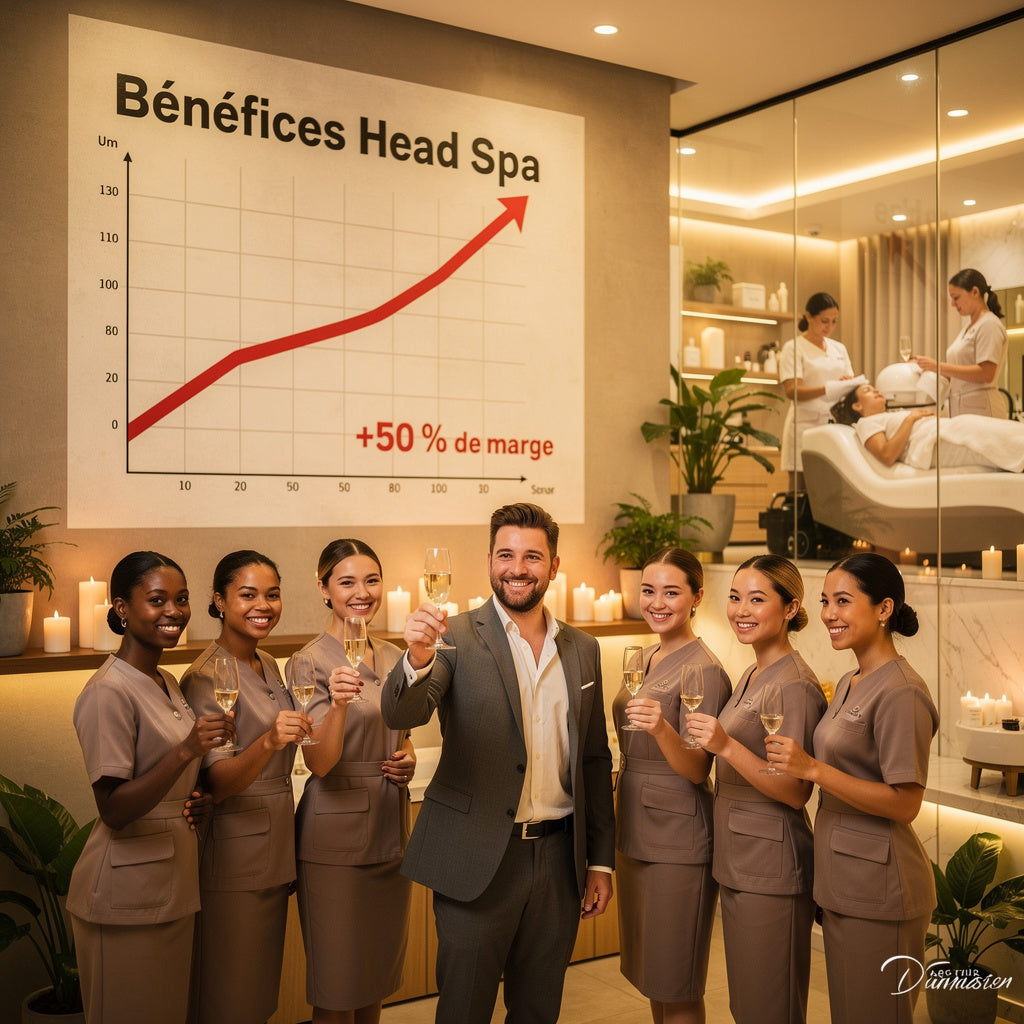
Profitability should be calculated before purchase. Estimate the total investment, average selling price, treatment duration, staff cost, consumables, maintenance and realistic occupancy rate. Then calculate how many sessions are required to recover the investment. This makes the decision operational rather than emotional.
The same logic applies when deciding between one premium multifunction station and several lighter pieces of equipment. The right choice depends on the size of the establishment, expected booking volume and the number of practitioners likely to use the room.
General business-investment guidance from Bpifrance can also be useful when structuring financing and return-on-investment assumptions.
Training your team to deliver professional scalp massage consistently
The quality of the service depends first on the competence of the team. Even excellent equipment cannot compensate for inconsistent pressure, poor practitioner posture, weak hygiene habits or a protocol that changes completely from one employee to another.
A training program should cover anatomy basics, professional positioning, rhythm, pressure, client communication, contraindication awareness, equipment use and cleaning procedures. Demonstration should be followed by supervised practice and regular quality checks.
For establishments developing a more complete offer, dedicated Head Spa training helps connect manual technique with room setup, equipment workflow and the overall client journey.
Standardization does not mean making the treatment mechanical. The team should master a common core protocol while retaining enough flexibility to adapt pressure, duration and sensory elements to the client.
Training also has a business impact: a well-trained team can explain the service more confidently, recommend the appropriate format and deliver a consistent experience that supports repeat bookings.
Integrating scalp massage into your service menu and strengthening premium positioning
Professional scalp massage can be sold as a standalone treatment, an optional upgrade, a signature service or one stage of a complete Head Spa experience. The best format depends on the establishment’s concept, average appointment length and existing client journey.
Positioning becomes stronger when the massage is integrated into a coherent treatment environment. Room design, lighting, sound, equipment and transitions between treatment stages should support the same promise. Guidance on designing a Japanese Head Spa space can help connect the protocol with the physical layout.
Pricing should reflect practitioner expertise, treatment duration, room occupancy, equipment depreciation and the value of the overall experience. A premium price is easier to defend when the client clearly understands what the service includes and why it differs from a basic shampoo massage.
Commercial communication should therefore explain the protocol rather than relying only on generic wellbeing language. Describe the sequence, the equipment, the professional approach and the sensory experience. This helps turn an unfamiliar service into an understandable premium offer.
When the service is well integrated, it can become a recognizable signature of the institute and a strong gateway toward more complete Head Spa programs.
Conclusion
Professional scalp massage can become a strategic pillar of a spa or beauty institute when technique, training, equipment and commercial positioning are treated as one complete system. Its value lies in creating a repeatable and distinctive experience rather than simply adding a few massage movements to an existing service.
To build a coherent treatment environment, explore the professional Head Spa equipment collection. The objective is to combine client comfort, practitioner ergonomics and operational performance in a setup that can support repeated daily use.
Before investing, define your protocol, estimated booking volume, staff training needs and target price. This reduces the risk of buying equipment that does not match your actual service model.
For personalized guidance on equipment selection and room organization, you can contact a MyHeadspa specialist.
FAQ
What is the difference between a basic scalp massage and a professional scalp massage?
A professional service follows a defined sequence, uses controlled pressure, includes an initial assessment and relies on equipment and hygiene procedures adapted to repeated professional use. The objective is consistency, comfort and a stronger perceived value.
How long should a professional scalp massage last?
Many protocols range from around 15 to 30 minutes. Shorter versions can be offered as add-ons, while longer formats can be integrated into a complete Head Spa experience. Duration should reflect the service objective rather than an arbitrary target.
What equipment should I choose for a premium service?
Prioritize stable professional furniture, comfortable neck support, easy-to-clean materials and enough access around the client. Depending on the protocol, a Head Spa basin, steam device or scalp-analysis tool can be added.
How can I train a team to deliver consistent quality?
Use one documented protocol, demonstrations, supervised practice and periodic quality reviews. Training should cover technique, ergonomics, hygiene, equipment use and client communication.
Can scalp massage be integrated into a complete treatment journey?
Yes. It can be combined with scalp cleansing, steam, rinsing, hair treatments and other sensory stages, provided that the sequence remains coherent and the practitioner adapts it to the client.
How should I set the price?
Calculate treatment-room time, staff cost, consumables, equipment depreciation and the positioning of the establishment. The final price should reflect the complete experience and professional expertise, not only the number of minutes spent on the massage.