
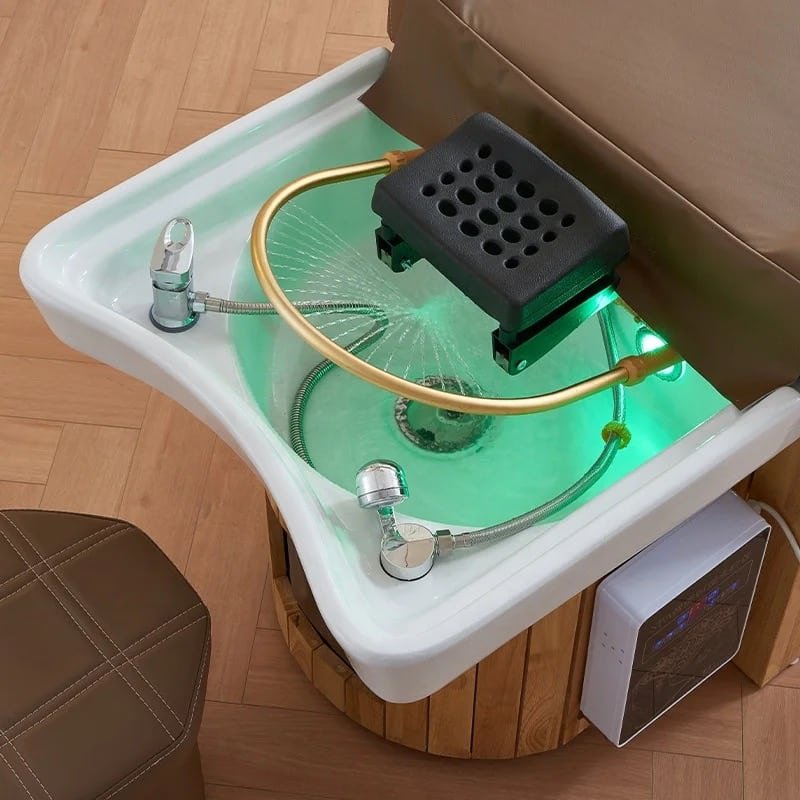
Discover how thoughtful interior design can transform the sensory experience of a Japanese Head Spa. Step into a world where aesthetics support deep relaxation. This guide covers the elements that turn a treatment space into a modern wellness sanctuary.

Understanding the Essence of a Japanese Head Spa
The Japanese Head Spa concept is built around serenity, wellness and the art of relaxation. Minimalism and harmony are central: natural materials such as wood and bamboo, soft colors and understated decoration. Today, these principles are enhanced by sustainable practices, connected technologies and more advanced ergonomic thinking. Designing such a space means balancing aesthetics, functionality and emotion.
Characteristics of an Authentic Head Spa
An authentic Japanese Head Spa stands out through:
The use of natural materials
Attention to privacy and a personalized experience
Inspiration from traditional tea houses and Zen philosophy
Integration of connected solutions such as smart chairs and customizable ambience
An eco-conscious approach using durable furniture and air-purifying plants
Table – Japanese Head Spa Identity
Element | Description |
Materials | Wood, bamboo, natural stone |
Ambience | Soft lighting, calm and Zen music |
Decoration | Minimalist and inspired by nature |
Innovation | Connected equipment and gentle technology |
Sustainability | Plants, recycled or locally sourced elements |
Choosing the Theme and Ambience
Japanese Aesthetics: Materials and Colors
Prioritize:
Light wood, natural stone and bamboo
Colors such as beige, off-white, light gray and moss green
Rice paper for screens and partitions
Integrating Elements of Nature
Add:
Bonsai trees, green plants and potted bamboo
Small water fountains
Zen stones, sand and mineral elements
Soft Lighting
Recommended lighting options include:
Dimmable lamps
Paper lanterns
Scented candles
Warm-toned connected lighting linked to a smart control system, if desired
Table – Types of Lighting
Lighting type | Desired effect |
Soft lighting | Calm and relaxation |
Lanterns | Traditional atmosphere |
Scented candles | Enhanced sensory dimension |
Connected lighting | Personalized ambience control |

Design and Ergonomics of Treatment Spaces
Smooth Circulation
Organize the room to support natural, uninterrupted movement. Optimizing the client journey and staff workflow improves operational efficiency while preserving a relaxed atmosphere.
Separation of Spaces
Use discreet, typically Japanese-inspired elements such as:
Wooden screens
Japanese fabric curtains
Low, modular partitions
Comfortable Furniture
Recommended elements include:
Comfortable reclining chairs for treatments
Low wooden tables
Floor cushions or tatami mats
Table – Ergonomic Layout
Element | Benefit | Client impact |
Smooth circulation | Fewer obstacles and better comfort | Deeper relaxation |
Separated zones | Greater privacy | Stronger immersion |
Ergonomic furniture | Improved comfort | Higher satisfaction and loyalty |
Profitability of a Japanese Head Spa in 2025
Why Invest in Japanese-Inspired Interior Design?
Strengthens premium positioning
Improves client loyalty through a memorable sensory experience
Supports a higher average service price through signature and immersive treatments
Business Model and ROI
Investment type | Estimated cost | Average return over 12 months |
Complete Zen interior fit-out | €8,000–€15,000 | 1.5× to 3× initial revenue |
Connected equipment | €2,000–€5,000 | +20% repeat business |
Associated premium services | Variable | 2× loyalty potential |
FAQ
What are the key elements of Japanese spa interior design?
Simplicity, natural materials, soft lighting, green plants and a Zen atmosphere. The overall design should create a calming feeling from the moment the client enters.
Why is lighting important in a Japanese spa?
Lighting structures the ambience, promotes relaxation and can reduce stress. Lanterns and candles are frequently used to create this effect.
How do natural materials influence the experience?
They create a connection with nature and a warm atmosphere, both of which are central to the feeling of well-being.
Which colors are typically used?
White, beige, light gray and moss green. Neutral tones help create a calmer environment.
Which decorative objects are commonly used?
Ceramics, Japanese prints, Zen stones, water fountains, tatami mats and raw wood are all common choices.