In the professional wellness sector, training is now an essential element for ensuring quality, safety, and operational excellence. Modern institutes must meet increasingly high standards: more demanding clients, structured rituals, correct posture, and consistent treatment quality.
Professional training allows practitioners to acquire reliable gestures, understand client needs, and develop ergonomic posture to work sustainably over time. Structured programs, as highlighted in our guide on Hair Spa Training , show how progressive learning can transform a beginner into a professional capable of performing consistent, high-quality rituals.
Institutional frameworks also confirm the central role of ongoing training. Recommendations published by the French Ministry of Labor emphasize the need to train practitioners to ensure safety, proper posture, prevention of risks, and quality manual gestures. Integrating these principles within your institute consolidates service reliability and enhances the premium identity of your establishment.
Key skills for a wellness practitioner in an institute
To ensure high-quality service in an institute, a wellness practitioner must master a combination of technical, postural, and relational skills. These skills require structured training to organize gestures and understand client needs effectively.
On the technical side, mastering protocols is essential. Being able to organize treatment sequences, adjust rhythm, modulate pressure, and maintain smooth gestures is crucial to provide a premium experience. Our guide on professional massage techniques clearly illustrates how gesture quality affects the overall perception of the ritual.
Postural skills are equally important. Practitioners perform repetitive gestures, and without proper ergonomics, they risk fatigue and muscular strain, which can compromise service consistency. Recommendations from Assurance Maladie emphasize the importance of preventing musculoskeletal disorders through proper posture and well-designed work organization.
Finally, a wellness practitioner must develop strong relational skills: listening, adapting to the client’s energy, communication during the treatment, and consistent professional presence. These human elements reassure clients, build trust, and enhance long-term retention.
Structure of an effective professional training program
Effective professional training follows a clear and progressive structure that allows practitioners to acquire all necessary skills to deliver high-quality services in an institute. The goal is not only to teach techniques but to build a professional posture that can be immediately applied in a real spa environment.
Theoretical modules form the core of the program. They cover fundamental gestures, transitions, guided breathing, and treatment rhythm. For institutes integrating Head Spa, our analysis on types of Head Spa training shows how to adapt modules to rituals focused on the scalp and overall wellness.
Training should also include a phase of supervised practical exercises. This allows practitioners to practice gestures, correct posture, and understand how to interact with clients in a real setting. Guidelines from AFPA emphasize the importance of guided practice to consolidate learning and develop lasting professionalism.
Finally, continuous assessment and standardization of protocols ensure a uniform level of quality. Clearly defining timing, sequences, and success criteria allows the institute to deliver a consistent experience regardless of the practitioner performing the treatment.
Essential equipment for high-quality professional training
The quality of professional training heavily depends on the equipment used. Ergonomic, stable, and institute-adapted tools allow trainees to develop correct gestures and sustainable posture from the beginning. Inadequate equipment can distort movements, limit fluidity, and reduce overall learning effectiveness.
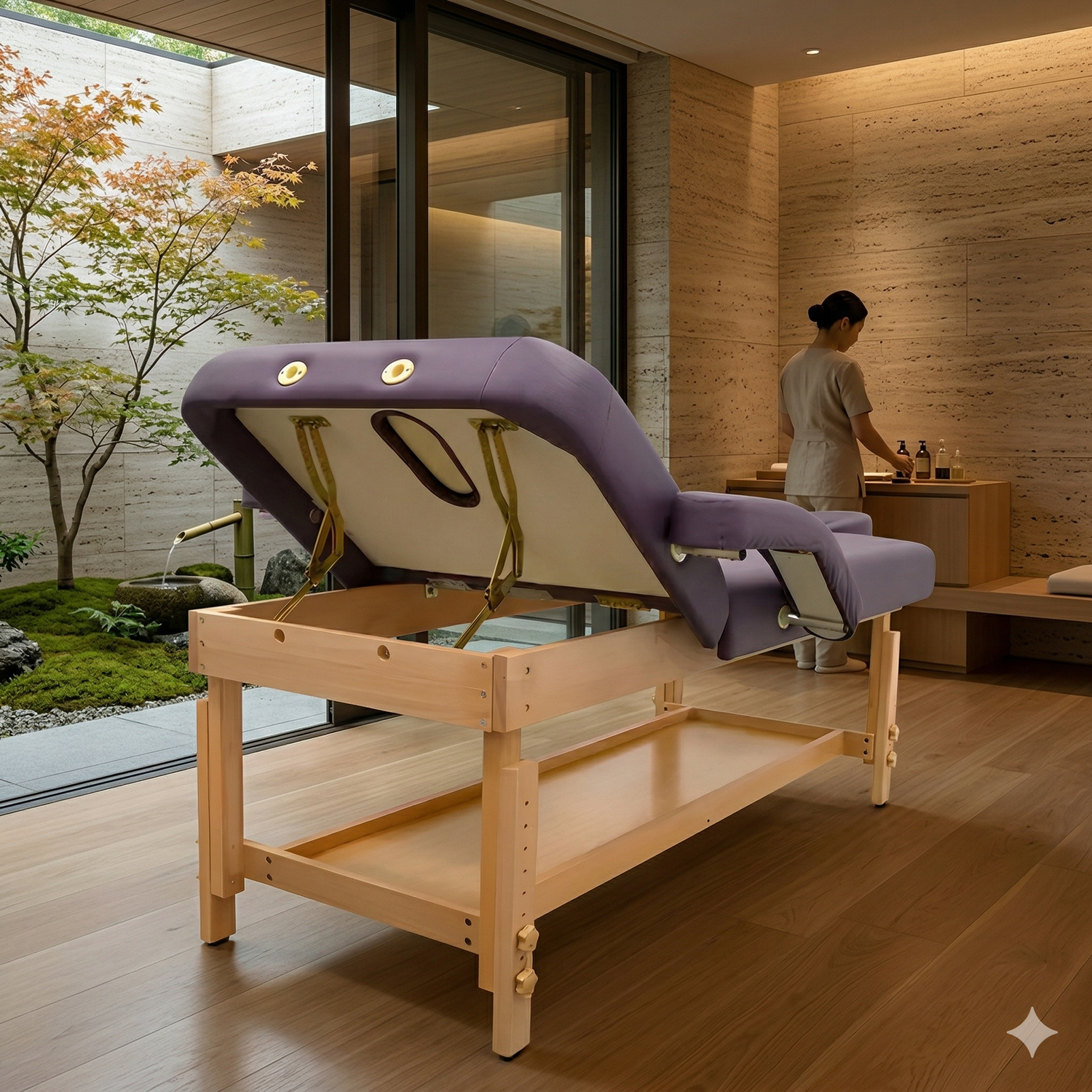
Professional tables designed for wellness treatments are central. They provide stability, comfort, and adjustable height to allow the practitioner to adopt an ideal posture. Models dedicated to sensory rituals, such as the Head Spa Kaisen Table , replicate a premium institute environment and facilitate learning smooth, technically correct gestures.
Additional tools also play a key role in training. These may include sensory accessories, tissue preparation devices, or tools used during relaxation phases. Their integration must align with the professional environment requirements. Check our selection of Head Spa professional accessories to structure your training space effectively.
Recommendations from ANACT highlight the importance of adapting spaces and equipment to prevent fatigue, reduce risks from repetitive gestures, and improve long-term professional development. Integrating ergonomic tools from the start ensures consistent skill development and better execution quality.
Integrating trained practitioners into professional treatment paths
Once training is complete, practitioners should be gradually integrated into the institute’s treatment paths. This phase is crucial: it consolidates acquired skills and ensures consistent quality for clients, regardless of which practitioner performs the ritual.
The first step is assessing the practitioner’s competencies. Trainers or institute managers check the accuracy of gestures, posture, rhythm management, and ability to adapt treatments to client needs. This step ensures the practitioner is ready to perform treatments safely in the spa environment.
Integration should be gradual. Practitioners can start with simpler treatments or specific parts of more complex protocols, progressing towards full autonomy. This structured approach is essential to maintain premium standards across the team.
Institutes wishing to create distinctive rituals can refer to our guide on creating holistic wellness experiences with Head Spa devices , which demonstrates how to integrate practitioners into complete treatment paths based on sensory experience, ergonomics, and technical consistency.
To guarantee consistent quality and compliance with professional standards, guidelines provided by Service Public offer clear directives on safety management, hygiene, operational standards, ergonomics, and institute responsibilities. Applying these directives strengthens the professionalism of your institute and enhances client satisfaction.
Certification and continuous professional development
Professional certification is essential to confirm the practitioner’s competence and strengthen the institute’s credibility. It ensures that every practitioner has acquired the necessary skills to deliver a consistent and high-quality service.
Continuous professional development is equally important. Techniques, protocols, and standards constantly evolve: regularly training staff maintains premium standards and allows the institute to meet the latest market demands.
For guidance on certification and professional updates, both Italian and French institutions provide useful resources. For example, France Compétences defines recognized certification levels and training paths, while internal institute programs can be integrated to create tailored programs.
Integrating certification and continuous development into training ensures solid skills, treatment safety, and a premium perception of service by clients. This approach strengthens the institute’s reputation and ensures a consistent, high-level professional experience.
Certified and continuously trained practitioners can apply best practices, use professional equipment correctly, and follow ergonomic protocols and safety standards.
Conclusion: enhancing your institute with well-trained practitioners
Professional training for wellness practitioners is a cornerstone for ensuring quality, safety, and consistency in service. Through structured programs, appropriate equipment, certification, and continuous professional development, a simple treatment transforms into a premium, distinctive experience aligned with your institute’s standards of excellence.
Investing in training increases client satisfaction, strengthens the institute’s reputation, and ensures a consistent level of professionalism among staff. The combination of technical skills, ergonomic posture, and regular updates reinforces the perceived value of treatments.
To explore training paths or receive guidance on professional equipment, our team is available to support your institute.
FAQ
Why is professional training important for practitioners in institutes?
Training ensures that practitioners acquire technical skills, correct posture, rhythm management, and the ability to adapt to clients. This guarantees a consistent and premium experience for every client in the institute.
What skills does a practitioner develop during training?
Training covers technical skills (gestures, sequences, pressure), postural skills (ergonomics, fatigue prevention), and relational skills (listening, communication, adapting to client energy).
How long is a professional training program for wellness practitioners?
Duration depends on the depth of the program and practical modules. Typically, programs combine theoretical modules, supervised practice, and continuous evaluations to ensure autonomy and competence.
What equipment is needed for high-quality training?
Ergonomic tables, sensory tools, Head Spa equipment for rituals, and professional accessories are essential. All tools should allow safe and effective learning. You can consult our selection of Head Spa professional accessories .
How to integrate trained practitioners into the institute’s treatment paths?
Integration is gradual, starting with simpler treatments under supervision until full autonomy is achieved. Practitioners then deliver complete rituals consistent with the institute’s premium standards.
Why is certification and continuous development important?
Certification confirms practitioner competencies and strengthens the institute’s credibility. Continuous development maintains premium standards, incorporates new techniques, and ensures consistent treatment quality.
How can I contact an expert for support with training?
For personalized support or guidance on professional equipment, you can contact a MyHeadspa expert.