
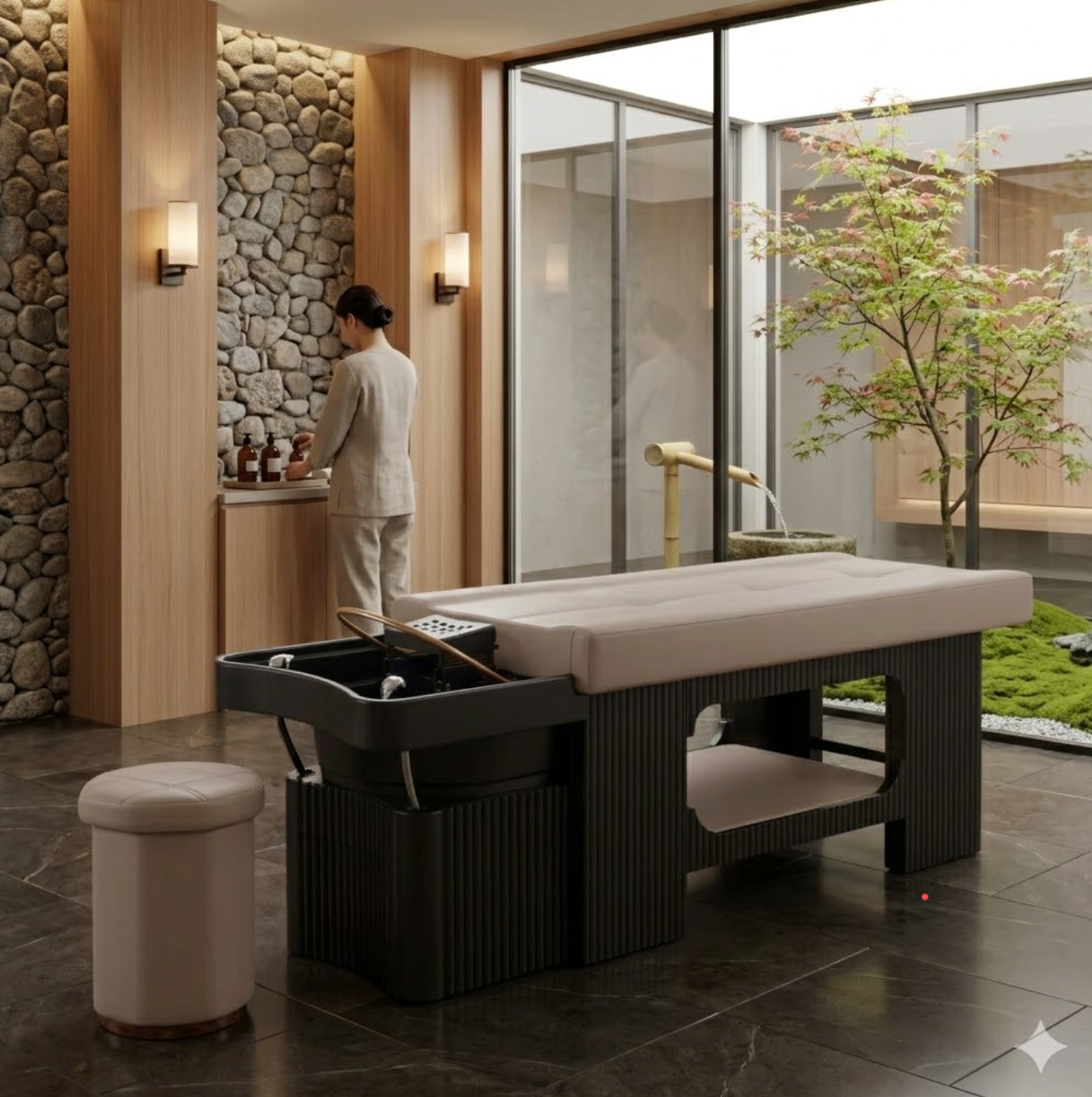
Le marché de la beauté classique arrive à saturation et vous sentez qu'il est temps de faire évoluer votre offre pour capter une clientèle plus haut de gamme. Cependant, l'idée d'ouvrir un head spa soulève souvent plus de questions qu'elle n'apporte de réponses : par où commencer ? Quel budget prévoir ? Est-ce réellement rentable ?
Sans une feuille de route précise, vous risquez de vous perdre dans des démarches administratives complexes ou d'investir dans un matériel inadapté qui pèsera sur votre trésorerie. L'improvisation est l'ennemie de la performance économique, surtout dans un segment aussi technique que le soin japonais.
Ce guide masterpiece a été conçu pour sécuriser chaque étape de votre lancement. De la conception du business plan à l'optimisation de votre rentabilité au m2, découvrez comment transformer votre vision en une entreprise prospère et pérenne.
Définir votre concept pour ouvrir un head spa unique sur votre secteur
Le succès de votre établissement repose sur votre capacité à ne pas être "une offre de plus" sur un marché déjà saturé. Pour ouvrir un head spa qui capte l'attention, vous devez construire une identité forte qui justifie l'abandon des habitudes de consommation classiques de vos clientes.
Analyser la demande locale et le positionnement de la concurrence
Avant de commander votre premier équipement, observez les "zones blanches" de votre ville. Si les salons de coiffure traditionnels proposent des massages capillaires de 5 minutes au bac, c'est là que se trouve votre opportunité. Votre objectif est de proposer ce qu'ils ne peuvent pas offrir : du temps, du silence et une expertise sensorielle exclusive.
Une analyse de marché efficace vous permet de définir votre "client idéal". S'agit-il d'une working-girl en quête de déconnexion rapide ou d'une clientèle luxe cherchant un rituel de 90 minutes ? Ce positionnement dictera non seulement votre décoration mais aussi votre politique tarifaire. Pour affiner cette étape, reportez-vous à nos conseils sur l'aménagement de head spa japonais pour créer une ambiance immersive.
Choisir le modèle japonais pour se différencier des soins classiques
Le concept head spa japonais repose sur une promesse simple : le soin du cuir chevelu par l'eau et la détente neuronale. Contrairement aux soins esthétiques classiques, vous utilisez des éléments visuels et sonores puissants comme l'arche d'eau "Golden Rain". Cet accessoire n'est pas qu'un outil technique, c'est votre meilleur argument marketing sur les réseaux sociaux.
En intégrant un matériel de prestige comme le Imperial Elite 360, vous sortez immédiatement de la comparaison avec les bacs de lavage standards. Vous vendez un rituel de santé globale, incluant la microcirculation et la gestion du stress, ce qui vous permet de positionner vos tarifs dans la fourchette haute du marché du bien-être.
Établir un business plan head spa solide pour sécuriser votre investissement
Trop de projets s'arrêtent prématurément faute d'une vision financière claire. Un business plan head spa n'est pas seulement un document pour la banque ; c'est votre boussole pour arbitrer entre vos envies esthétiques et la réalité de votre trésorerie. Votre objectif est d'atteindre le point mort (seuil de rentabilité) le plus rapidement possible.
Estimer le budget de démarrage entre matériel et formation
Le budget pour ouvrir un head spa se divise en trois piliers : l'équipement, l'aménagement et la montée en compétence. Vouloir économiser sur la formation pour acheter un bac plus cher est l'erreur classique. À l'inverse, un matériel haut de gamme sans le protocole de soin associé ne restera qu'un simple meuble de coiffure.
-
Équipement (40%) : Bac japonais certifié, mobilier et petit matériel technique.
-
Formation (20%) : Apprentissage des protocoles rituels et techniques de vente premium. Consultez notre programme de formation head spa japonais.
-
Marketing et Lancement (20%) : Identité visuelle, site web et publicité locale.
-
Trésorerie de sécurité (20%) : Pour couvrir les premiers mois de loyer et de charges.

Calculer la rentabilité au mètre carré et les prévisions de chiffre d'affaires
Dans un institut, chaque centimètre carré doit produire de la valeur. Le head spa excelle dans cet exercice car il nécessite peu de surface pour un prix de prestation élevé. Pour calculer votre gain potentiel, nous utilisons l'indice de performance suivant :
$$Rentabilité_{hebdo} = \frac{(Prix_{moyen} \times Volume_{soins}) - Charges_{fixes}}{Surface_{occupée}}$$
Prenons un exemple concret : une cabine de 6 m² générant 15 soins par semaine à 90€. Après déduction des consommables et de la quote-part de loyer, la rentabilité au m2 d'un espace head spa est souvent 2,5 fois supérieure à celle d'un poste de coiffure traditionnel. Pour une analyse détaillée, découvrez notre dossier sur les coûts réels d'ouverture.
Choisir le bon statut juridique et remplir les obligations administratives
Le choix de votre structure légale est une étape déterminante qui impactera directement votre fiscalité et votre protection sociale. Pour ouvrir un head spa, il n'existe pas de statut "type", mais une adaptation nécessaire à l'envergure de votre projet et à votre situation personnelle.
Arbitrer entre la Micro-Entreprise et la Société (SASU/SARL)
La plupart des gérantes débutent sous le régime de la micro-entreprise pour sa simplicité de gestion. Cependant, ce statut ne permet pas de déduire vos charges (achat du bac, loyer, produits). Dès que votre chiffre d'affaires progresse, le passage en société devient indispensable pour optimiser votre rentabilité et protéger votre patrimoine personnel.
|
Critère |
Micro-Entreprise |
Société (SASU/EURL) |
|
Gestion |
Ultra-simplifiée |
Comptabilité complète |
|
Investissement |
Pas de déduction de TVA |
Récupération de la TVA sur le bac |
|
Évolutivité |
Limitée par les seuils |
Illimitée (recrutement possible) |
Diplômes et certifications pour exercer légalement en institut
C'est la question cruciale : faut-il un CAP coiffure pour ouvrir un head spa ? La réponse dépend de la nature exacte de vos prestations. Si vous effectuez des coupes ou des colorations, le diplôme est obligatoire. En revanche, pour des soins crâniens axés sur le bien-être et la détente, vous pouvez exercer sous le code NAF de l'esthétique ou des soins corporels.
Pour garantir la conformité de votre établissement, nous vous recommandons de consulter la fiche pratique de la DGCCRF. Quel que soit votre parcours, une formation certifiante head spa reste votre meilleur atout pour prouver votre expertise auprès de vos assureurs et de votre clientèle.
Respecter les normes hygiène et les protocoles sanitaires obligatoires
Dans un établissement où l'eau est au cœur de la prestation, la gestion sanitaire n'est pas une option, c'est votre bouclier juridique et commercial. Les normes hygiène head spa sont strictes car elles touchent à la fois à la sécurité dermatologique et à la prévention des risques bactériens en milieu humide.
Garantir la sécurité de votre clientèle par une désinfection rigoureuse
Le protocole de nettoyage doit être systématique entre chaque rendez-vous. L'attention doit se porter non seulement sur le bac lui-même, mais surtout sur l'arche dorée et les filtres. Une cliente qui constate la rigueur de votre mise en place sera beaucoup plus encline à recommander votre institut.
-
Circulation d'eau : Utilisation d'un agent décontaminant biodégradable pour rincer le circuit interne.
-
Surfaces de contact : Désinfection de l'encoche de nuque et du lit avec une solution fongicide et bactéricide.
-
Traitement des linges : Usage de serviettes à usage unique ou lavées à 60°C minimum pour une hygiène irréprochable.
Pour approfondir ces aspects techniques, vous pouvez consulter les recommandations de l'Agence Régionale de Santé (ARS) concernant les établissements de soins et de bien-être. Un respect strict de ces directives est le meilleur moyen de fidéliser une clientèle exigeante sur la propreté.
Assurer la pérennité de votre matériel par un entretien préventif
Négliger l'entretien, c'est condamner votre investissement à court terme. Le calcaire est l'ennemi numéro un des pompes de massage et des buses de l'arche d'eau. Un entretien hebdomadaire permet d'éviter l'obstruction des circuits et de maintenir la pression optimale de votre matériel de head spa.
En suivant les procédures détaillées dans notre guide sur les normes sanitaires et protocoles d'hygiène, vous prolongez la durée de vie de votre bac de plusieurs années tout en garantissant une expérience sensorielle constante à vos clientes.
Aménager votre espace sans travaux grâce au matériel autonome
La barrière technique la plus fréquente pour ouvrir un head spa est l'absence d'arrivée d'eau dans la cabine souhaitée. Traditionnellement, cela impliquait des travaux de plomberie lourds, des frais de maçonnerie et une immobilisation de votre local pendant plusieurs semaines. Cette approche rigide est aujourd'hui obsolète pour les gérantes qui privilégient l'agilité.
Choisir la flexibilité du système ZenFlow pour un lancement rapide
L'innovation technologique permet désormais de s'affranchir des contraintes immobilières. En optant pour un système autonome, vous réduisez votre "Time-to-Market" de manière spectaculaire. Là où un projet classique nécessite deux mois de préparation, le système ZenFlow V2 vous permet d'être opérationnelle seulement 10 jours après votre commande.
Cette réactivité est un avantage stratégique majeur. Elle vous permet de tester votre marché et de commencer à générer du chiffre d'affaires immédiatement, sans alourdir votre dette de création. Cette capacité d'adaptation est d'ailleurs l'un des piliers de la réussite soulignés par Bpifrance pour les jeunes entreprises.
Optimiser l'ergonomie de votre cabine pour le confort de la praticienne
Un aménagement réussi ne se limite pas à l'esthétique ; il doit servir votre santé au travail. Dans un espace restreint de 6 m², chaque centimètre compte. Le placement de votre matériel hair spa innovant doit permettre une circulation fluide et une posture de travail qui prévient les douleurs dorsales.
Privilégiez un mobilier dont les dimensions sont adaptées à la morphologie de la praticienne. Une hauteur d'encoche de nuque standardisée et un accès dégagé autour du bac facilitent les manipulations capillaires sans torsion excessive du buste. Pour visualiser les configurations optimales, consultez nos schémas dans le guide sur l'aménagement technique d'un head spa.
Lancer votre communication pour remplir votre agenda dès l'ouverture
L'erreur la plus commune des nouvelles gérantes est d'attendre l'ouverture officielle pour communiquer. Pour ouvrir un head spa avec succès, vous devez créer une sensation d'exclusivité et de manque bien avant que votre matériel ne soit installé. Votre communication doit transformer une simple curiosité en une prise de rendez-vous immédiate.
Utiliser la puissance de l'ASMR et des réseaux sociaux
Le head spa est une expérience viscéralement visuelle et auditive. Utilisez votre smartphone pour filmer les détails de votre équipement, comme le ruissellement de l'eau sur l'arche dorée ou la brume s'échappant du bac. Ces contenus dits "ASMR" (Autonomous Sensory Meridian Response) déclenchent des réactions de bien-être immédiates chez les spectateurs et sont extrêmement viraux sur Instagram et TikTok.
En montrant les coulisses de votre aménagement et la qualité de votre matériel de prestige, vous éduquez votre clientèle sur la valeur de la prestation. N'hésitez pas à partager votre passion et votre parcours de formation pour incarner votre marque et rassurer sur votre expertise technique.
Créer une offre de lancement irrésistible pour fidéliser rapidement
Votre objectif prioritaire est de transformer vos 50 premières clientes en ambassadrices passionnées. Pour cela, concevez une offre "Fondatrice" limitée dans le temps. Par exemple, proposez un diagnostic cuir chevelu offert pour tout rituel réservé durant la semaine d'ouverture. Cela vous permet de collecter des avis positifs sur votre fiche Google Business Profile dès le lancement.
Le référencement local est le moteur de votre croissance. Assurez-vous que votre établissement apparaisse dès que quelqu'un recherche "head spa" dans votre ville. Pour maximiser vos chances de remplir votre agenda, consultez nos stratégies avancées sur la rentabilité et marketing head spa.

Lancer votre activité avec une vision claire et une méthode éprouvée
Ouvrir un établissement de soin capillaire japonais est bien plus qu'une simple extension de vos services actuels. C'est un pivot stratégique vers le luxe et le bien-être holistique. En suivant cette méthode rigoureuse — de la solidité de votre business plan à l'agilité de votre aménagement — vous minimisez les risques opérationnels pour vous concentrer sur ce qui compte vraiment : l'expérience exceptionnelle de vos clientes.
Le marché est actuellement en pleine phase d'expansion. Les gérantes qui s'installent aujourd'hui avec un concept head spa japonais fort seront les leaders de demain dans leur ville. Ne laissez pas l'hésitation technique freiner votre ambition entrepreneuriale.
Vous êtes maintenant à un clic de concrétiser votre vision. Pour passer de la théorie à la pratique, choisissez votre prochaine étape :
Découvrir le système ZenFlow V2
FAQ
Combien de temps faut-il pour ouvrir un head spa
Avec une solution sans travaux comme le ZenFlow, vous pouvez être opérationnelle en moins de 15 jours après réception de votre matériel. Si vous optez pour un aménagement classique avec plomberie lourde, comptez un délai de 2 à 4 mois incluant les devis, les travaux et la mise en conformité.
Quel est l'emplacement idéal pour installer votre bac japonais
Privilégiez une pièce calme, isolée des bruits de la rue ou du reste du salon de coiffure. Une surface de 6 à 8 m² est suffisante pour créer une cabine immersive. L'essentiel est de pouvoir tamiser les lumières et de garantir une température ambiante agréable pour la cliente durant le soin.
Peut-on proposer des prestations de head spa à domicile
Oui, c'est une tendance forte. Grâce au matériel portable et aux systèmes de réservoirs autonomes, vous pouvez offrir un service de luxe directement chez vos clientes ou en événementiel (mariages, hôtels). Cela permet de démarrer votre activité avec des charges fixes extrêmement réduites.